
Skip to content

Educational guide · based on the sources listed below

Parkinson's Stages and Treatment Options
Medicines, Vyalev, DBS and supportive care

People often mix up two things. One is a five-stage scale that describes how Parkinson's affects the body. The other is the set of treatments specialists choose from. They are linked, but treatment does not follow a fixed step-by-step ladder.

This is general education only. A specialist chooses each treatment for the individual. Nothing here says what any one person should receive.

The five Hoehn & Yahr stages

The Hoehn & Yahr scale is a tool doctors use to describe how much Parkinson's affects movement and independence. It moves at a different pace for everyone. Some people stay in the same stage for many years.

  1. 1

    Unilateral, mild

    Symptoms affect one side of the body. They are usually mild and have little or no effect on daily activities.

  2. 2

    Symptoms on both sides

    Symptoms affect both sides of the body, or the neck and trunk. Balance is not yet affected.

  3. 3

    Balance problems

    Balance problems may lead to falls. The person can still usually manage daily activities without physical help.

  4. 4

    Severe symptoms, more help needed

    Symptoms greatly limit daily activities. The person needs help but can still stand or walk without assistance.

  5. 5

    Severe dependency

    Without help, the person needs a wheelchair or stays in bed. Extensive help with daily care is usually needed.

A stage number describes how a person is functioning. It does not decide the treatment. Specialists also look at symptoms, how well medicines work, age, other health conditions and the person's own goals.

Three main types of Parkinson's treatment

Tablets, infusion pumps and DBS: how they differ

These are not steps everyone goes through in order. Most people use oral medicines for many years. Infusion and DBS are two different options for some people with advanced symptoms. A Parkinson's specialist decides if either one is suitable, and many people never need them. My father has only taken oral medicines, along with physiotherapy.

  • Watercolour illustration of a weekly pill organiser with plain unbranded tablets and a glass of water
    My father has taken these

    Oral Parkinson's medicines

    Tablets or capsules taken by mouth. Most treatment starts here. Levodopa is the main medicine; it turns into dopamine in the brain. Other add-on medicines, such as dopamine agonists, MAO-B inhibitors and COMT inhibitors, can help it work longer. Exactly which ones, and how often, depends on the person.

    Parkinson's Foundation: prescription medications
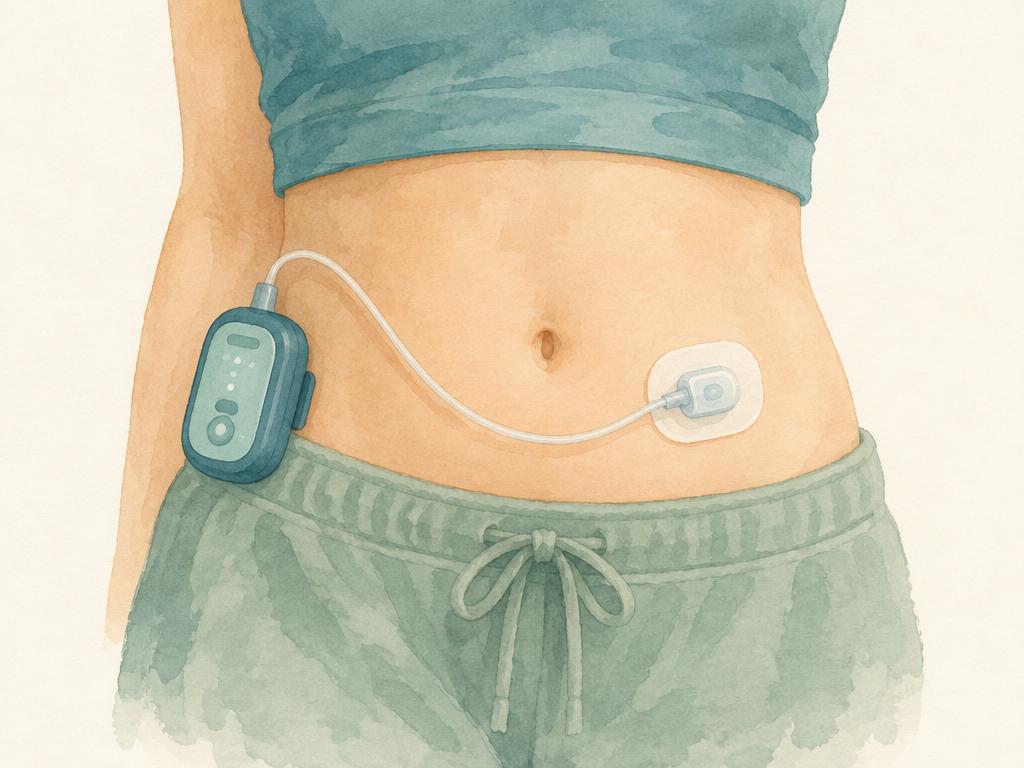
  • Watercolour illustration of a small unbranded wearable pump with thin tubing to a patch on the abdomen; not a real product photo
    Not received by my father

    Continuous infusion under the skin

    Vyalev (called Produodopa in some countries) contains foslevodopa and foscarbidopa. A small wearable pump delivers it through a thin tube under the skin, day and night. It is for selected people with advanced Parkinson's whose ON and OFF periods are hard to control with tablets. Availability differs by country.

    Cleveland Clinic Abu Dhabi: continuous infusion therapy
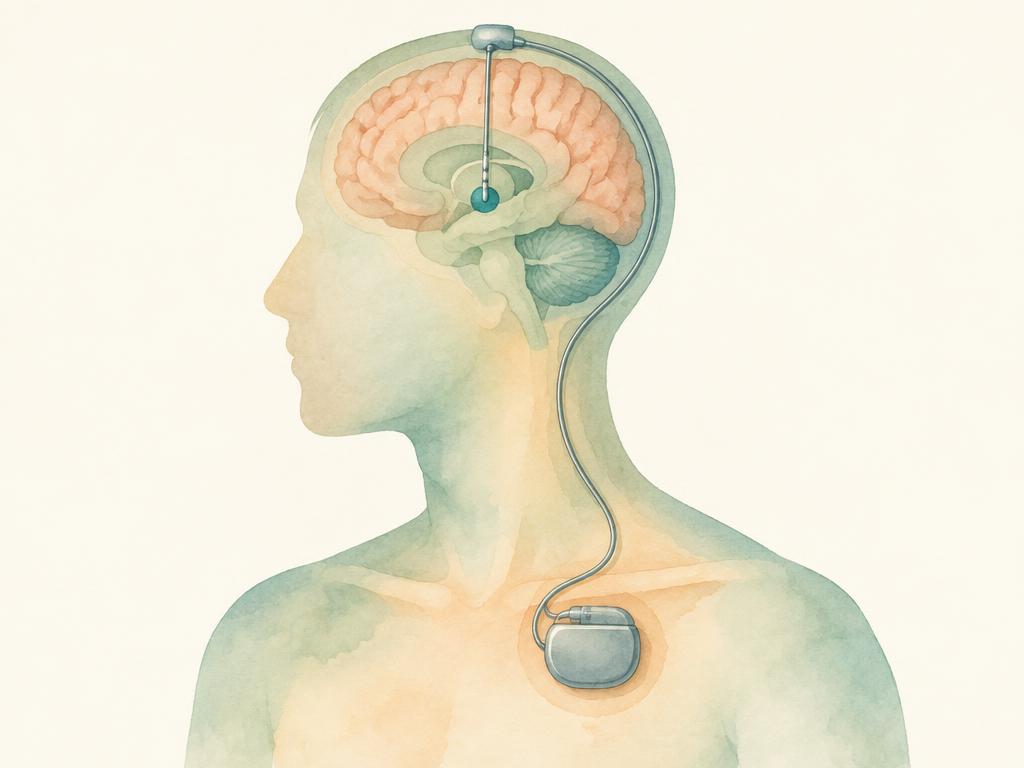
  • Watercolour diagram of deep brain stimulation: a thin lead in the brain connected under the skin to a small device below the collarbone
    Not received by my father

    Deep brain stimulation (DBS)

    A surgery where thin wires (electrodes) are placed in a specific part of the brain. They connect to a small battery device, like a pacemaker, placed under the skin of the chest. It sends steady electrical pulses that can reduce some movement symptoms. Only carefully selected patients are suitable, after detailed specialist tests.

    Parkinson's Foundation: deep brain stimulation

Illustrations are simplified drawings, not photos of real devices or brands.

An example four-phase treatment guide

This is an example, not advice. It shows how treatment discussions often change over time. The phases are not a required order, and they do not match the numbered stages above. A specialist decides what fits and when.

Phase 1

Treating early movement symptoms

When movement symptoms affect daily life, a specialist may suggest medicine. Levodopa becomes dopamine in the brain, helping replace a chemical that is low in Parkinson's. Other medicines may also be suitable.

  • Levodopa (with carbidopa or benserazide)
  • Dopamine agonists (medicines that mimic dopamine)
  • MAO-B inhibitors (medicines that slow dopamine breakdown)
  • Exercise and education from diagnosis onward

Phase 2

When medicine wears off between doses

ON periods are times when medicine is working; OFF periods are times when it wears off and symptoms return. These changes are called motor fluctuations. Dyskinesia means involuntary extra movements. A specialist may adjust doses or add another medicine to help.

  • Adjusted oral levodopa timing and dose
  • COMT inhibitors (medicines that help levodopa last longer)
  • An added dopamine agonist or MAO-B inhibitor
  • A diary of symptoms and dose times to guide changes

Phase 3

When to discuss advanced treatments

If symptoms remain hard to control with oral medicines, a specialist may assess whether a pump or surgery could help. Each option has benefits and risks. Suitability depends on the person, and these treatments are not a required sequence.

  • Vyalev / Produodopa (foslevodopa + foscarbidopa), delivered continuously under the skin by a pump
  • Duopa (levodopa-carbidopa gel), delivered into the small intestine through a tube
  • Apomorphine pump (delivers a medicine that mimics dopamine)
  • Deep brain stimulation (DBS), surgery to place electrodes that help control movement symptoms

Phase 4

Support as care needs change

Support from several health professionals can help at any stage. As needs change, the team can help with daily activities and comfort, and support family caregivers.

  • Physiotherapy
  • Occupational therapy
  • Speech and swallowing therapy
  • Nutrition support
  • Palliative care (support for symptoms and quality of life at any stage, including alongside other treatment)

What my father has actually received

So far, his care has been Parkinson's medicines taken by mouth, plus physiotherapy. He has not had Vyalev/Produodopa, Duopa, an apomorphine pump or DBS. They are listed here to explain the options. A specialist would need to assess whether any of them suits a person. His real history lives on the treatment journey and medicines pages.

Sources and further reading

Personal experience, not medical advice. I share our family's experience here. Talk to your doctor before starting, stopping or changing any medicine. New or worsening speech trouble, facial drooping or sudden weakness can be an emergency. Seek urgent medical help immediately. Full disclaimer